Why toddlers bite, hit and throw — the developmental research (and what actually helps)
Getting the call from daycare that your child bit someone is a special kind of parental mortification. The developmental research offers real comfort: physical aggression is most common at exactly this age, it is overwhelmingly outgrown, and the things that help are learnable.
Few parenting moments sting like discovering your sweet, book-loving two-year-old is "the biter". It can feel like a verdict — on the child, or on your parenting. The research says it's neither. It's a developmental stage with a well-mapped shape, a clear set of causes, and a strong evidence base for what to do about it.
The surprising fact: aggression peaks at two
The landmark data here come from Richard Tremblay and colleagues, who followed 572 Canadian families from infancy and tracked physical aggression at 17, 30 and 42 months. The counterintuitive finding: most children start using physical aggression in infancy or toddlerhood, and most then learn to stop — humans largely learn to regulate physical aggression during the preschool years, not later.1 In their sample, only a minority of children (14%) followed a high-aggression trajectory; the rest showed little aggression or a modest amount that faded.
Sit with what that means: a toddler who bites or hits is not off-script. The script is "toddlers sometimes lash out physically, then gradually stop as words and self-regulation come online". The task for parents isn't to be shocked that aggression appeared — it's to supply the conditions under which it fades on schedule.
Behaviour is communication (before it's anything else)
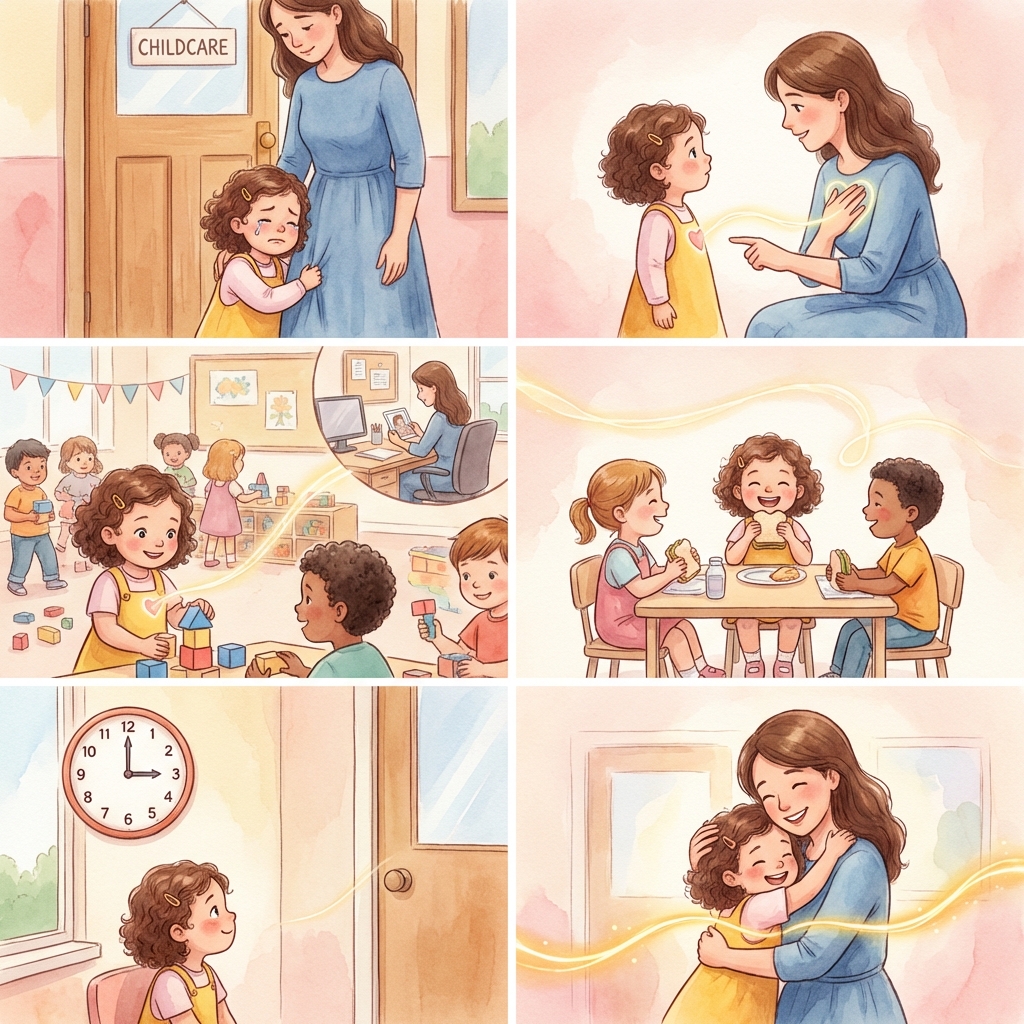
Australian parenting guidance is unusually aligned on the framing: toddlers bite, pinch, hit and throw mostly to express something they can't yet say — excitement, anger, frustration, overwhelm, sore gums, or "that's my digger".5 ACECQA's StartingBlocks resource for families makes the same point about biting in early learning settings: it's common, it isn't a sign something is wrong with the child (or the parenting, or the educators), and the response should focus on understanding the trigger rather than punishing the messenger.6
Reading the behaviour as a message changes the question from "how do I stop this?" to "what is this telling me?" — a shift we've written about at length in behaviour management vs emotional regulation. It's also the thinking behind our Emotion Decoder: start from the behaviour, decode the feeling underneath, respond to that.
The language gap: feelings arrive before words
Why does the peak land at two? A big part of the answer is a timing mismatch: big feelings are fully installed years before the language to express them. A longitudinal study following children from 18 to 48 months found that toddlers with better language skills — and whose language grew faster — showed less anger by preschool age, partly because words unlocked better strategies: calmly asking for help, and distracting themselves during frustrating waits.2
The teeth, in other words, are doing a job the words can't do yet. That's why "use your words" is the right destination but useless as a mid-meltdown instruction — if the words were available, the bite wouldn't have happened. The evidence-aligned move is to supply the words yourself, calmly and repeatedly, until they take: "You're angry. Max took the truck. You wanted it."
Monkey see: what Bandura showed about imitation
The other engine of toddler behaviour is imitation. Albert Bandura's famous 1961 "Bobo doll" experiments showed that preschoolers who merely watched an adult behave aggressively toward an inflatable doll went on to reproduce that aggression — often in strikingly faithful detail — even with the adult gone.3 Children learn how conflict is handled by watching it be handled.
The implication cuts both ways. It's a caution — a household where anger looks like yelling and grabbing will be studied by its smallest resident — but it's also the good news, because modelling runs in the calm direction too. Every time your child watches you get frustrated and respond with a breath, a named feeling and a repair, they're taking notes on that as well.
What the evidence says actually helps
- A calm, consistent, boring response. Firm and brief — "No biting. Biting hurts" — delivered the same way every time, without drama. Consistency is what teaches; heat is what gets remembered instead of the lesson.5
- Name the feeling, then the alternative. "You're angry. You wanted the truck. You can say 'my turn please' or stomp your feet." You are lending language until it's owned — which is co-regulation in action (see co-regulation before self-regulation).2
- Watch for the trigger pattern. Most biting has a context: crowding, tiredness, teething, competition over toys, transitions. Adjust the environment and you often prevent the rehearsal of the habit.6
- Rehearse the hard moments in calm ones. You can't teach during a meltdown. Reading a story together about sharing, waiting or being gentle — ideally one starring your own child — pre-loads the script for next time. That's the research-backed idea Little Narratives builds its personalised stories and songs around.
- Partner with your daycare educators. A consistent approach between home and the service is explicitly recommended in Australian guidance — same words, same calm, same plan.6
What the evidence says doesn't help
The clearest negative finding in this literature concerns harsh physical punishment. Elizabeth Gershoff and Andrew Grogan-Kaylor's meta-analysis — 111 effect sizes covering more than 160,000 children — found spanking associated with more aggression and more antisocial behaviour, not less, with no evidence of benefits.4 Through the Bandura lens, the problem is obvious: hitting a child to teach them not to hit models precisely the behaviour it's meant to eliminate.3 Biting a child back — folk advice that still circulates — fails the same test.
Shame is the quieter dead end. Long lectures, labelling ("he's a biter"), and big emotional reactions all give the behaviour enormous attention while teaching none of the missing skills. The evidence-aligned formula is almost anticlimactic: low drama, high consistency, lots of language, and time.
The toddler who bites today is, statistically speaking, the preschooler who negotiates tomorrow. Your job in between isn't to win the battle of wills — it's to keep supplying the calm, the words and the practice until their development catches up with their feelings. It will.
References & further reading
- Tremblay, R. E., Nagin, D. S., Séguin, J. R., Zoccolillo, M., Zelazo, P. D., Boivin, M., Pérusse, D., & Japel, C. (2004). Physical aggression during early childhood: trajectories and predictors. Pediatrics, 114(1), e43–e50.
- Roben, C. K. P., Cole, P. M., & Armstrong, L. M. (2013). Longitudinal relations among language skills, anger expression, and regulatory strategies in early childhood. Child Development, 84(3), 891–905.
- Bandura, A., Ross, D., & Ross, S. A. (1961). Transmission of aggression through imitation of aggressive models. Journal of Abnormal and Social Psychology, 63(3), 575–582.
- Gershoff, E. T., & Grogan-Kaylor, A. (2016). Spanking and child outcomes: Old controversies and new meta-analyses. Journal of Family Psychology, 30(4), 453–469.
- Raising Children Network (Australia). Biting, pinching and hair-pulling in babies and toddlers.
- StartingBlocks.gov.au (ACECQA, Australia). Challenging behaviour: biting.