Toddler worries: what's developmentally normal, and when to ask for help
A century of research on childhood fear tells a reassuring story: most toddler worries arrive on a predictable developmental schedule, and most pass on one too. Here's how to read the map — and how to know when a worry deserves a professional conversation.
A toddler who was happily passed around at Christmas suddenly howls when a relative reaches for her. A two-year-old who used to wave goodbye at daycare now clings to your leg like the floor is lava. A four-year-old announces there is a crocodile under the bed. If you're a mum or dad watching this unfold, the obvious question is: is this normal?
In the great majority of cases, the answer from the research is yes — not just normal, but a sign of a brain developing exactly on schedule. This article maps what a century of developmental research says about which fears show up when, what "transient" versus "persistent" actually looks like, and the specific Australian supports available if a worry doesn't pass.
Fear is a feature, not a fault
The most comprehensive review of normal childhood fear — Eleonora Gullone's survey of over a hundred years of research, published in Clinical Psychology Review — defines normal fear as an adaptive reaction to a real or imagined threat, with a primary function of keeping a small, vulnerable human alive.1 A baby who is wary of unfamiliar adults, or a toddler who protests when their parent leaves, is running exactly the software evolution installed.
Two findings from that review are worth holding onto. First, fears are largely transitory — they decrease in number and intensity as children mature. Second, the content of fear changes in a predictable sequence: infant fears are concrete and immediate (loud noises, strangers, separation), while the fears of older children become more abstract and anticipatory.1 Your child isn't collecting worries at random; they're moving through a well-documented developmental sequence.
The age-by-age map of normal fears
Every child is different, and temperament shifts the timing — but the broad pattern is remarkably consistent across studies and cultures.1
Around 6–12 months: strangers and separation appear
Stranger wariness typically emerges around 8 months, precisely because your baby has now formed a strong attachment to familiar people — being suspicious of everyone else is the flip side of loving you specifically. It often eases between 18 months and 2 years, though temperament can stretch it out.4 Separation anxiety starts around 6–7 months and commonly peaks somewhere between 14 and 18 months.3
Ages 1–3: separation, loud noises, the vacuum cleaner era
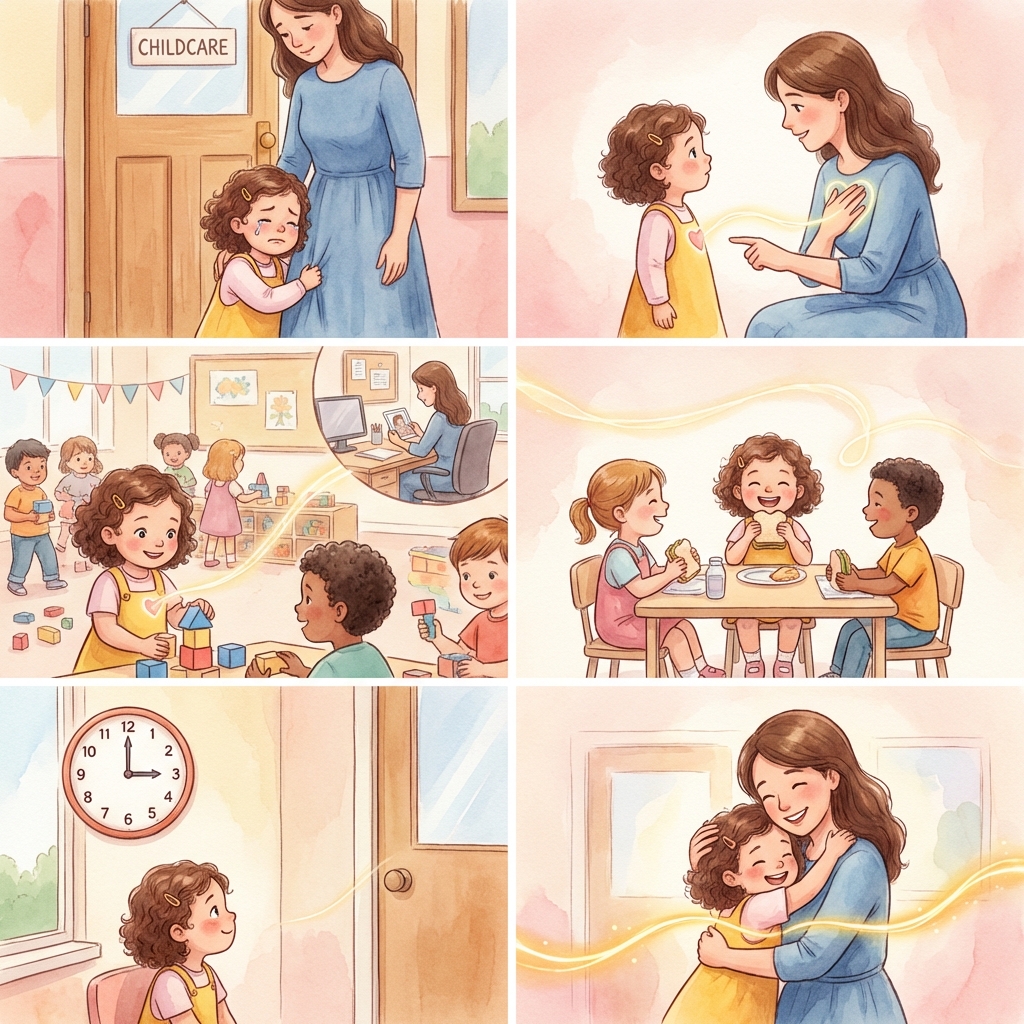
Toddlers fear immediate, concrete things: being apart from you, thunder, dogs, the bath drain, costumed characters. Notably, toddlers don't tend to worry the way older children do — their fear is in-the-moment rather than anticipatory.2 Separation fear at daycare drop-off sits squarely in this window; we've written a full guide to what the attachment research says about drop-off tears.
Ages 3–5: the imagination switches on
Preschoolers gain something wonderful — imagination — and it comes with a tax. Fear of the dark, monsters, and imaginary creatures typically arrive in this window, because a child can now conjure things that aren't in front of them but can't yet reliably separate imagined from real.1 Night-time fears deserve their own discussion; see our companion piece on what the research says about fear of the dark.
Transient vs persistent: the difference that matters
Because normal fears and more persistent anxiety can look similar in a single moment — tears, clinging, avoidance — the useful lens is not what your child fears but how the fear behaves over time. Australian guidance from the Raising Children Network suggests watching three things:2
- Trajectory. Typical fears come and go, and fade as the child matures or gets familiar with the situation. A worry that is steady or growing over months is worth more attention than one that spikes and settles.
- Interference. Does the fear stop your child doing things they otherwise want to do — playing, joining in at daycare, sleeping, enjoying family life? Occasional wobbles are expected; a fear that reshapes the family's whole week is a bigger signal.
- Age-fit. Separation tears at 2 are textbook; the same intensity at 8 is much less common. A fear that would have been typical two years ago but is still going strong deserves a check-in.
Emerging Minds — the national workforce centre for child mental health — makes the same point for the 2–4 age band specifically: some anxiety around new experiences, changed routines and separation is a normal part of development at this age, and the goal is gentle support and gradual practice, not eliminating the feeling.5
What helps an anxious toddler day to day
Across the Australian parent resources and the developmental literature, the practical playbook is consistent:25
- Acknowledge, don't dismiss. "You're feeling scared about the dog. Lots of people feel scared sometimes" beats "Don't be silly, he's friendly." Naming the feeling is the first step in learning to manage it — it's the whole idea behind our Emotion Decoder.
- Stay calm yourself. Toddlers read your nervous system before they read the situation. A matter-of-fact tone tells them the situation is survivable.
- Preview what's coming. Unfamiliarity is fuel for toddler fear, so walking through a new situation in advance — in words, pictures or story — takes the edge off. This is the mechanism behind preparation stories, and it's the research base Little Narratives builds on when it creates a personalised story about your child meeting their specific big moment.
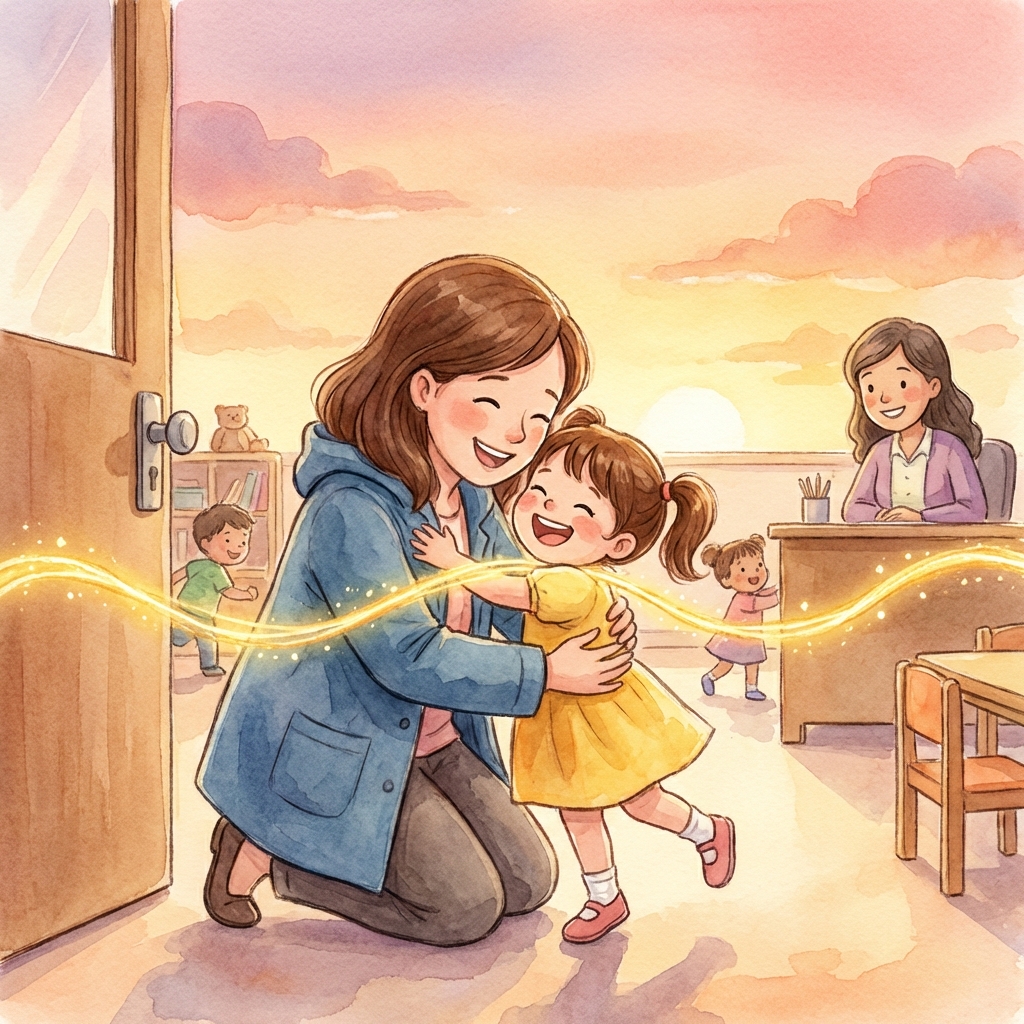
- Practise small separations and reunions. Always say goodbye (slipping away quietly undermines trust), keep the goodbye short and warm, and be reliably back when you said you would.3
- Keep routines steady. Predictable days give an anxious toddler less uncertainty to process — more on the science of that in our article on predictability and routines.
When to ask for help — and who to ask in Australia
In Australia, the practical pathway usually starts close to home:
- Your GP can assess what's going on, rule out anything physical, and refer on if useful.
- Your child health nurse (community or maternal and child health services, depending on your state) offers free developmental check-ins and is well practised at the "is this normal?" conversation.
- Emerging Minds publishes free, practical resources for parents on toddler and preschooler anxiety.5
- Beyond Blue has plain-English information on anxiety in children and young people, plus a 24/7 support line (1300 22 4636).6
The reassuring bottom line from the research: fear in early childhood is not a malfunction. It's a developmental stage with a beginning, a shape, and — for the vast majority of children — an end. Your job isn't to make the fear disappear on command. It's to be the calm, predictable presence your child borrows courage from while their own grows in — and to ask for help without hesitation if a worry overstays its welcome.
References & further reading
- Gullone, E. (2000). The development of normal fear: A century of research. Clinical Psychology Review, 20(4), 429–451.
- Raising Children Network (Australia). Anxiety, worries and fears in children.
- Raising Children Network (Australia). Separation anxiety in babies and children.
- Raising Children Network (Australia). Stranger anxiety in babies and children.
- Emerging Minds (Australia). Anxiety in toddlers and preschoolers — a resource for parents.
- Beyond Blue (Australia). Understanding anxiety — including anxiety in children and young people.